
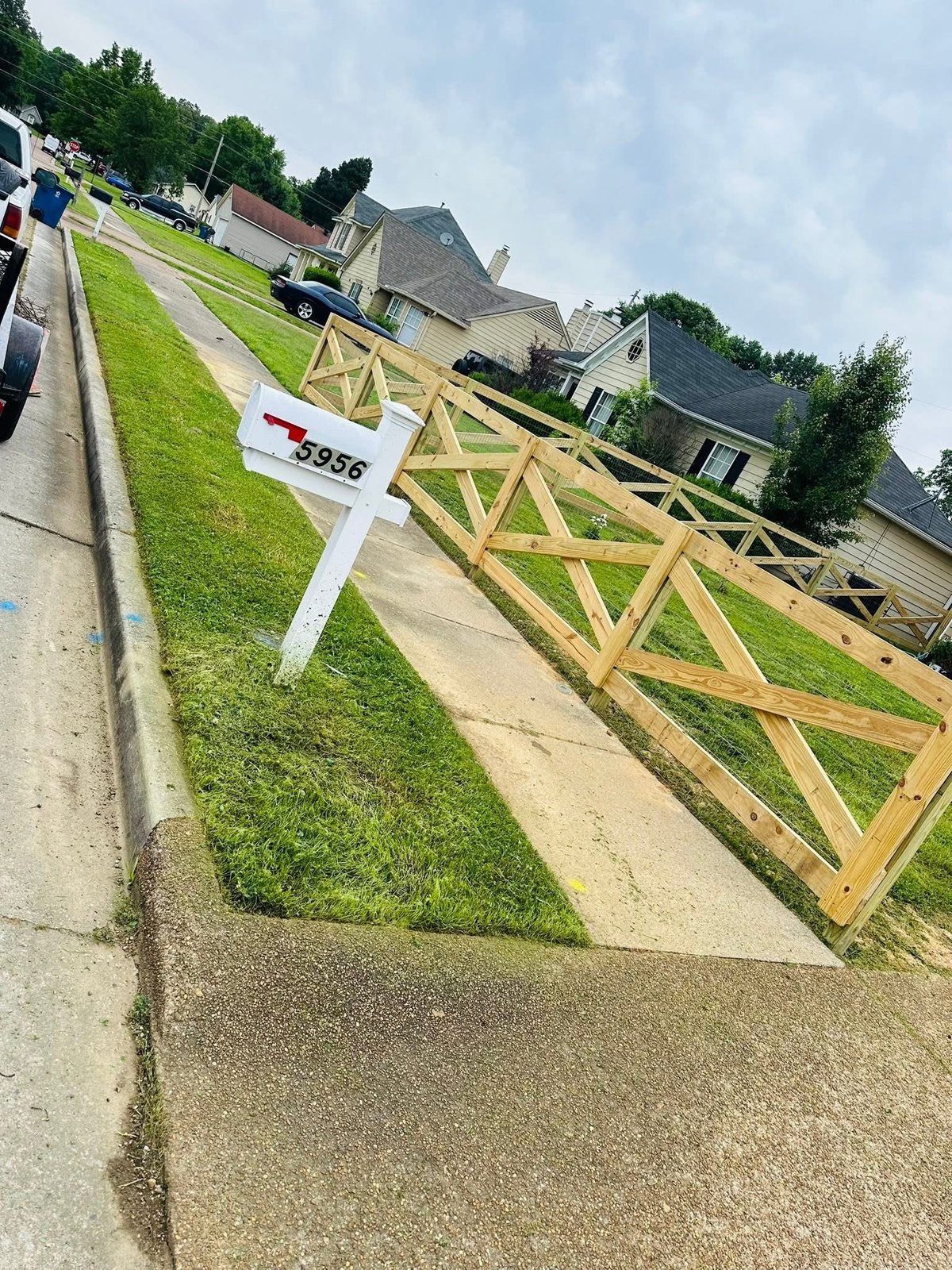
It's the question almost every homeowner asks somewhere around the third fence bid, usually after the neighbor leans over the property line and says he's pretty sure you need one.
Fair question, and the honest answer is that it depends on how tall the fence is and where exactly you live. Memphis and unincorporated Shelby County share one set of rules. The incorporated suburbs each run their own. And the city limit is not a suggestion — the rules genuinely change when you cross it.
Here's how it actually works, starting with the number that decides the whole question.
The 7-Foot Line Is the Whole Question in Memphis
In Memphis and unincorporated Shelby County, a building permit is required for any fence over 7 feet in height. That is the line. Below 7 feet, no building permit is required.
But do not stop reading there, because "no permit required" is not the same as "no rules apply." The zoning height limits in the Memphis and Shelby County Unified Development Code still govern what you can build, permit or not. Plenty of homeowners clear the permit requirement and then run straight into a height limit they never knew existed.
When a permit is required, it is issued through Develop901, the joint City-County permitting portal. The minimum building permit fee starts around $75.
Height Limits: 4 Feet in Front, 9 Feet in Back
This is where most fences get redesigned. Under UDC Sub-Section 4.6.7C:
- Front yard: 4 feet. The exception is wrought iron or decorative metal fencing, which is allowed up to 8 feet.
- Side and rear yards: up to 9 feet within the required setbacks.
That gap between 4 feet out front and 9 feet out back is the single most common source of surprise. A homeowner pictures a 6-foot privacy fence wrapping the whole property, and the front stretch of it is not allowed to exist at that height. The 4-foot front limit is specifically why wrought iron and decorative metal get their own 8-foot carve-out — an open metal fence reads very differently at the street than a solid 8-foot wall of cedar would.
So the practical version: solid privacy fencing belongs in the back and sides. If you want height at the front, the material matters as much as the measurement.
Chain Link: One Word Decides Whether It's Allowed
If your plan is chain link, there is a material rule that catches people out.
Uncoated or bare galvanized chain link is prohibited in residential zoning districts in Memphis. Vinyl-coated chain link is allowed.
Same fence, same function, same price bracket — the difference is whether the wire is coated. It is an easy thing to miss because the two look nearly identical in a photograph and are often listed side by side in a supplier's catalog. If you are set on chain link, specify vinyl-coated and the restriction disappears.
Corner Lots: Two Front Yards, Not One
A corner lot is treated as having two front yards for zoning purposes, which means the 4-foot limit can apply to both street-facing sides rather than just one.
On top of that, sight-triangle visibility rules apply at the intersection, keeping the view clear for traffic. That combination is why a corner lot sometimes allows noticeably less fence than the lot directly next door — the neighbor has one front yard, and the corner has two plus a visibility restriction.
If you are on a corner, map out which sides count as front before you order a single panel. It is the most common way a corner-lot project gets redrawn after the fact.
The Suburbs Play by Their Own Rules
Everything above covers Memphis and unincorporated Shelby County. Cross into an incorporated suburb and you start over.
Germantown, Collierville, Bartlett, Millington, Arlington, and Lakeland each run their own building departments and fence ordinances. Several require a permit for a residential fence regardless of height, plus a site plan — which is a stricter rule than Memphis applies. On the Mississippi side, Southaven and Olive Branch do the same.
This matters because a homeowner in Bartlett who researches "Memphis fence permit rules" will read something that does not apply to them at all, and could reasonably conclude no permit is needed when their city requires one at any height. It is worth confirming which jurisdiction you are actually in before you plan around the 7-foot line.
Property Lines and Easements Come Before Everything Else
A fence must sit entirely on the owner's property. It cannot encroach into a public right-of-way or into a recorded utility or drainage easement.
That last one is the part people miss. An easement is not visible from the surface — there is no marker in the grass. It is a recorded legal right for a utility or the drainage system to use a strip of your lot, and a fence built across one may have to come out later at your expense when the utility needs access. You can verify the same way the city does, by pulling the recorded easement, but the practical version for most homeowners is that the property line and the easement line are both worth confirming before the layout is staked.
A survey runs roughly $400 to $800 in the Memphis area. Whether you need one depends on how confident you are in the line. If the neighbor's existing fence and your understanding of the property line disagree, that is the moment to find out — not after your fence is built eight inches over and the neighbor sells.
Call 811 Before You Dig — It's Free and It's the Law
Call 811 before digging. It is free, it is required by state law, and it takes about 3 business days to get a locate.
Utility locates mark gas, electric, water, and fiber along your run so nobody drives a post through a gas line. Three business days is not long, but it is long enough to matter if you are scheduling a crew — put the call in before you finalize a start date rather than the morning of.
HOA Approval Is Separate From a City Permit
HOA approval is separate from and does not replace a city permit. You can hold a perfectly valid city permit and still be in violation of your covenants, and the HOA is not obligated to care that the city approved it.
The timelines differ too. HOA review cycles typically run 2 to 6 weeks, against a same-week city turnaround. So the HOA is usually the long pole in the schedule, not the city. If you are working toward a date — a closing, a party, a dog that has discovered the neighbor's garden — start the HOA submission first.
How Long the Whole Thing Actually Takes
Adding it up, here is a realistic sequence:
- HOA approval, if applicable: 2 to 6 weeks
- 811 utility locate: 3 business days
- Building permit, if required (over 7 feet): about 1 to 2 weeks, plus a fee starting around $75
- The build itself: 1 to 3 days for most residential yards
The build is the short part. Everything that delays a fence project happens before a shovel touches the ground, and it happens in the paperwork and the approval queue.
How North Slope Handles the Permit Question
We do not hand you a fence and wish you luck with the city. When we walk your property we work through the height limits against your actual yard, confirm whether the 7-foot permit threshold applies to what you want to build, and flag it if you are in a suburb operating under its own ordinance rather than Memphis rules.
If a permit is required, we handle it as part of the job. If it is not, we will tell you that too, and tell you which zoning height limits still apply. And if you are in an HOA, we will tell you plainly that the approval is yours to get and that it takes longer than the city will — because the fastest way to lose a customer is to let them believe the fence is two weeks out when it is six.
The same crews handle our fencing work in Memphis and Cordova, and if the project has you thinking about the rest of the exterior, you can see everything we handle under roofing services.
Still Not Sure Which Rules Apply to Your Lot?
That is a normal place to be, and it is exactly the question worth asking before you buy material.
Call (870) 218-4440 or request a free on-site quote. We will walk the property with you, tell you what your yard actually allows, and give you a written quote that separates material, labor, gates, and the permit line so there are no surprises at the end.
Memphis Fence Permit FAQ
Do I need a permit to build a fence in Memphis?
It depends on height. A building permit is required for any fence over 7 feet in Memphis and unincorporated Shelby County. Below 7 feet, no building permit is required — but the height limits in the Unified Development Code still apply. Permits are issued through Develop901, the joint City-County permitting portal, and the minimum building permit fee starts around $75.
How tall can I build a fence in Memphis?
Under UDC Sub-Section 4.6.7C, the front yard height limit is 4 feet, except for wrought iron or decorative metal fencing, which is allowed up to 8 feet. Side and rear yards allow up to 9 feet within required setbacks.
Can I use chain link for a fence in Memphis?
Uncoated or bare galvanized chain link is prohibited in residential zoning districts in Memphis. Vinyl-coated chain link is allowed. If you are set on chain link, vinyl-coated is the version to specify.
How do fence rules work on a corner lot in Memphis?
A corner lot is treated as having two front yards for zoning purposes, so the 4-foot limit can apply to both street-facing sides. Sight-triangle visibility rules also apply at the intersection, which keep the view clear for traffic. That combination is why a corner lot sometimes allows less fence than the lot next door.
Do the Memphis suburbs have different fence permit rules?
Yes. Incorporated suburbs including Germantown, Collierville, Bartlett, Millington, Arlington, and Lakeland each run their own building departments and fence ordinances, and several require a permit for a residential fence regardless of height plus a site plan. The Mississippi suburbs Southaven and Olive Branch do the same. Memphis rules do not travel with you across a city limit.
What else should I check before building a fence in Memphis?
Three things. First, property lines — a fence must sit entirely on your property and cannot encroach into a public right-of-way or a recorded utility or drainage easement. A survey runs roughly $400 to $800 in the Memphis area. Second, call 811 before digging; it is free, required by state law, and takes about 3 business days for a locate. Third, remember HOA approval is separate from and does not replace a city permit.
Find Out What Your Yard Allows
Height limits, setbacks, and the permit threshold all depend on your specific lot. We'll walk it with you, tell you where you stand, and hand you a written quote with the permit line broken out. Free, no pressure.
Get My Free QuoteOr call (870) 218-4440 — we answer the phone.