
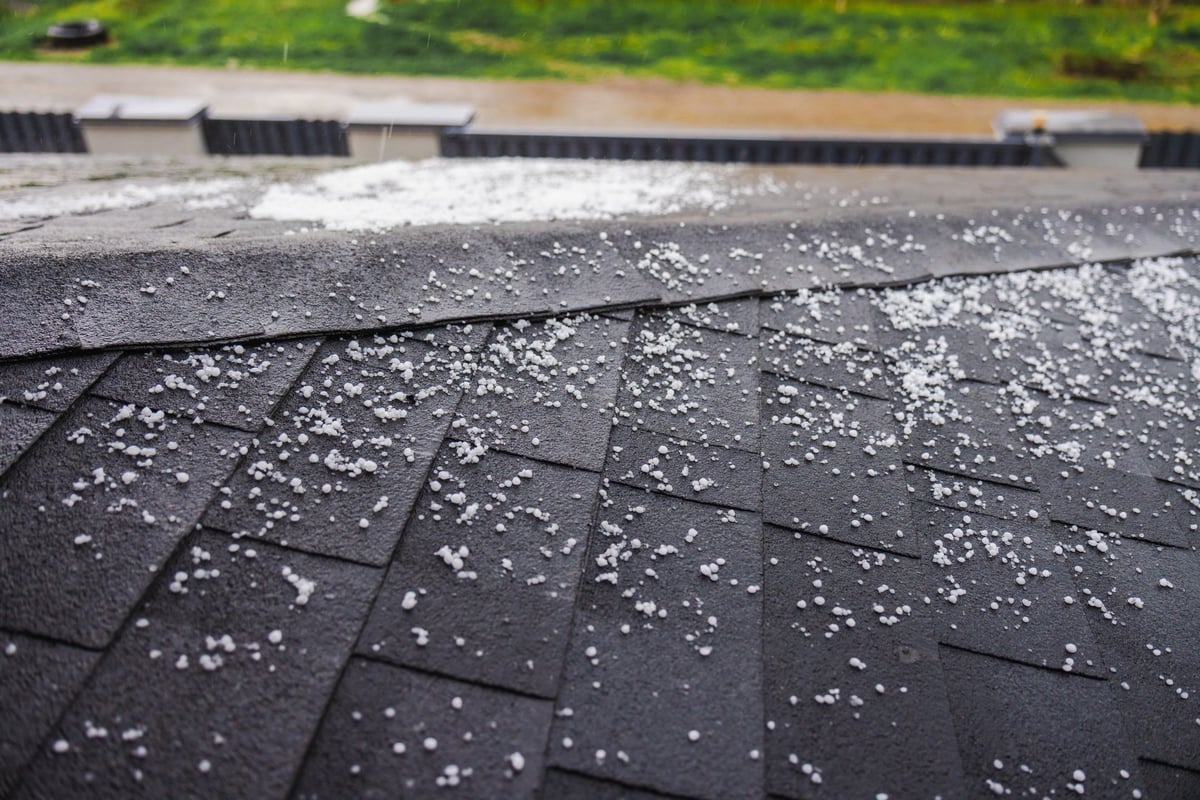
The storm rolls through around 9 p.m., the power flickers, and by morning there's a shingle in your driveway and a dent in the truck hood. Now what?
Most Memphis homeowners have paid a roofing premium for fifteen years and never filed once. So when the day comes, they don't know the sequence — and the sequence is most of the game. A legitimate claim gets denied all the time, not because the damage wasn't real, but because the homeowner did the right things in the wrong order.
Here's how a storm damage claim actually runs in Shelby County and across the Mid-South, start to finish.
What you're actually up against
Memphis sits in the tail of the hail belt. Between the spring line storms coming up out of Arkansas and the straight-line wind events that flatten fences from Cordova to Southaven, most roofs in this metro take at least one serious hit a decade. Insurers know that. Policies here have been rewritten steadily over the last several years, and two changes matter more than anything else:
- Separate wind/hail deductibles. Many Mid-South policies now carry a percentage deductible for wind and hail — typically 1% to 2% of the dwelling coverage — instead of a flat dollar amount. On a $350,000 home, that's a $3,500 to $7,000 out-of-pocket, not the $1,000 you assumed.
- ACV-only roof endorsements. Some carriers have quietly moved older roofs to actual cash value settlements. That means depreciation comes off and never comes back.
Read your declarations page before you do anything else. It takes four minutes and it determines whether filing is even worth it.
Step 1: Document before you clean up
Take photos the morning after, before you move a single branch. Wide shots of each elevation of the house, then close-ups of anything obvious — displaced shingles, dented gutters and downspouts, torn fence pickets, damaged siding, the AC condenser fins.
Photograph the soft metals especially. Gutters, vents, and flashing dent visibly when shingles may not show anything from the ground, and adjusters use those as corroborating evidence that hail of a damaging size actually fell on your property.
Note the date and approximate time of the storm. You'll need it, and "sometime in April" is not an answer that helps your claim.
Step 2: Get an independent inspection before you call the carrier
This is the step people skip, and it's the one that changes outcomes.
If you file first and the adjuster finds nothing, you now have a claim on your record with no payout — and that claim follows you at renewal. If you have a roofer inspect first, you find out whether you have real, documentable damage before anything goes on paper.
We do these free, and we do them honestly. If your roof took cosmetic granule loss and nothing more, we'll tell you that and tell you not to file. If it took a hit, we'll document it in a way an adjuster can actually work from. Not sure what you're looking at? Our guide on how to spot hail damage on your roof covers what's visible from the ground and what isn't.
Step 3: File the claim
Call your carrier's claims line or file through the app. You'll get a claim number and an adjuster assignment, usually within 24 to 72 hours — longer after a widespread event, when every carrier in the metro is triaging hundreds of Memphis-area claims at once.
Watch the clock. Most Tennessee, Arkansas, and Mississippi policies require prompt notice, and many carriers apply a one-year filing window from the date of loss. Waiting until the ceiling stains show up two seasons later is how good claims turn into denied ones.
Ask three questions when you file, and write the answers down:
- What is my wind/hail deductible on this claim?
- Is my roof settled at replacement cost or actual cash value?
- What's the deadline to submit a supplement?
Step 4: The adjuster appointment
The adjuster will schedule a visit and get on your roof. Be there. Better - have your contractor there.
An adjuster is working a queue and may be inspecting a dozen properties that day. When someone who does this for a living walks the roof with them, points out the test squares, and shows the collateral damage on the gutters and vents, the scope that comes back is more complete. That's not adversarial. It's just two people looking at the same roof with the same information.
The adjuster is generally looking for a threshold density of hail bruises within a test square, functional damage rather than cosmetic, and evidence consistent with the reported date of loss.
Step 5: Read the scope and the first check
A week or two later you get a settlement summary and, usually, a check that's smaller than you expected. That's normal. Here's why:
ACV vs. RCV. Replacement cost value is what it costs to replace the roof today. Actual cash value is that number minus depreciation. On a replacement-cost policy, the carrier pays ACV first, you complete the work, and then they release the withheld depreciation as a second check.
So a $16,000 roof with a $5,000 deductible and $3,000 of depreciation looks like: first check $8,000, second check (after completion) $3,000, your cost $5,000. The math only works if you actually claim the recoverable depreciation — and plenty of homeowners never do.
Line items. Check that the scope includes everything: tear-off, decking replacement allowance, underlayment, ice-and-water where required, drip edge, ridge vent, pipe boots, and haul-off. Missing line items are the single most common reason a settlement falls short of the real job cost.
Step 6: Supplement anything they missed
If the scope is short, you file a supplement with documentation. This is routine - not a fight. Decking rot that wasn't visible until tear-off, code-required upgrades, an underpriced line item: all of it is supplementable with photos and an invoice.
How North Slope handles this
We don't take assignment of benefits, and we don't "waive your deductible" - that's insurance fraud in all three states we work in, and the contractors offering it will be gone before your shingles are.
What we do: inspect free and tell you the truth about what we find, document the loss in adjuster-readable format, meet your adjuster on site, price the job off the same estimating platform the carrier uses so the numbers line up, and handle the supplement paperwork when the scope comes back light. You pay your deductible. The carrier pays the rest. Nobody lies to anybody.
We run this same process for storm damage restoration across Memphis, Southaven, and the surrounding metro.
When to call us
Call us if:
- A hail or high-wind event hit your area in the last twelve months and you've never had the roof looked at.
- You see shingle debris, dented gutters, or granule piles at the downspouts.
- You have interior ceiling stains, especially near penetrations or valleys.
- Your claim was denied and you believe there's real damage.
- You got a settlement and the number doesn't cover a real roof.
We'll be straight with you either way. A free inspection costs you a phone call and about forty-five minutes, and it's the cheapest insurance there is against finding out the hard way in February. See everything we handle under roofing services.
Ready to find out where you stand?
Storm damage doesn't get cheaper by waiting, and claim windows close. Call (870) 218-4440 or request your free inspection below - we'll walk your roof, tell you what we actually see, and if there's a claim worth filing, we'll help you file it right the first time.
Storm Damage Claim FAQ
Will filing a storm damage claim raise my insurance rates?
A single weather-related claim is generally treated differently than an at-fault claim, but carriers do consider claim frequency at renewal, and widespread storm events across the Memphis metro can push rates up region-wide regardless of whether you filed. That's exactly why we recommend a free inspection first - so you only file when there's real, documentable damage.
How long do I have to file a storm damage claim in Tennessee?
Most policies require prompt notice of loss, and many carriers in Tennessee, Arkansas, and Mississippi apply a one-year window from the date of the storm. Check your policy's specific language - and don't wait, because proving the date of loss gets harder every month that passes.
What's the difference between ACV and RCV on my roof claim?
Actual cash value is the cost to replace your roof minus depreciation for age and wear. Replacement cost value is the full cost to replace it. On an RCV policy you get an ACV check up front and the withheld depreciation after the work is completed. On an ACV-only policy, the depreciation is never paid.
Can a roofer waive or cover my insurance deductible?
No. It's illegal in Tennessee, Arkansas, and Mississippi, and any contractor offering it is telling you exactly how they'll treat your warranty. Your deductible is your legal obligation under the policy.
What if my claim gets denied but I know there's damage?
You can request a re-inspection, submit additional documentation, or invoke the appraisal clause in your policy. Independent third-party documentation from a contractor who inspected the roof is usually what turns a denial around - which is another reason to get inspected before you file.
Do I have to use the contractor my insurance company recommends?
No. You have the right to choose your own contractor in all three states. Preferred-vendor programs work for the carrier's cost structure, not necessarily for your roof.
Ready to find out where you stand?
Storm damage doesn't get cheaper by waiting, and claim windows close. We'll walk your roof, tell you what we actually see, and if there's a claim worth filing, we'll help you file it right the first time.
Get My Free InspectionOr call (870) 218-4440 — we answer the phone.